
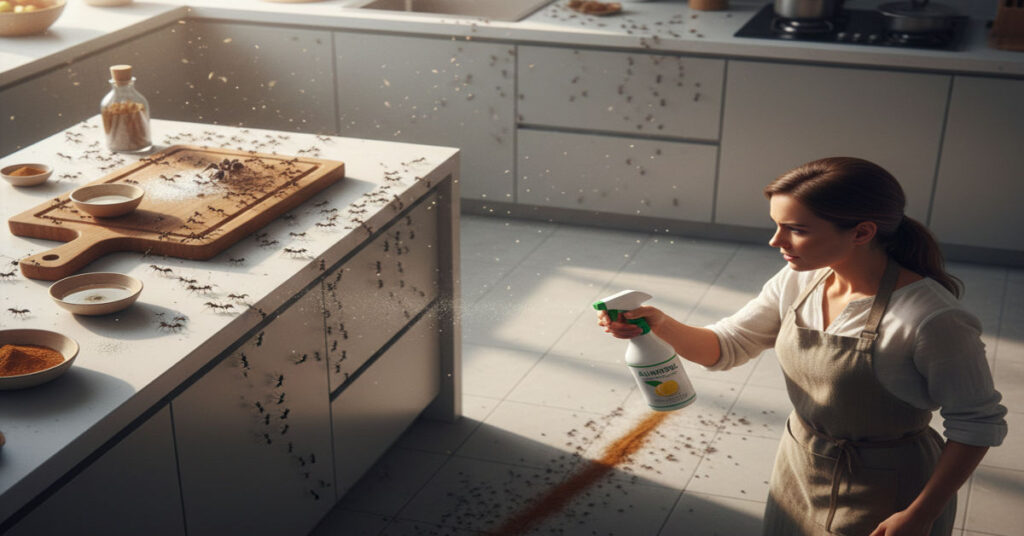
Ants enter homes around food, water and warm shelter. In this How to Get Rid of Ants you will learn how natural solutions can disrupt ant behavior, eliminate infestations, and prevent reentry without harsh chemicals or professional services. Many ants navigate via scent trails, and if those paths are erased or blocked repeatedly, the ant presence drops significantly. Other DIY strategies use bait mixtures to attract ants and bring control agents back to the colony itself. In addition to direct control, halting food access and sealing entry gaps remains vital for long‑term success. Natural methods vary in speed and persistence; some work immediately by repelling ants on sight, while others gradually reduce colonies through shared bait uptake and dehydration effects. Readers looking to reduce ant numbers responsibly can use household items like vinegar, citrus, essential oils, baking soda, and food‑grade diatomaceous earth, avoiding toxic pesticides while still gaining measurable results. Scientific and home pest control sources confirm that these solutions affect ant navigation or physical survival, making them accessible for gardeners, families, and renters alike. This article maps real methods to real situations, so you understand when to use a spray versus a bait, how to protect pets and children and what to expect as ants retreat.
How Ant Behavior Guides Natural Control
Ants communicate and travel along scent trails left by pioneering workers seeking food or water. Interrupting those pheromone trails is the foundation of many natural methods. Household vinegar has acetic acid which masks these chemical signals and reduces ant movement. Applying a 1:1 white vinegar and water mix to window sills, counter edges and baseboards breaks the ants’ navigation cues, prompting them to scatter or avoid treated paths. Lemon juice has a similar effect; its acidity also overwrites pheromone markers and deters ants with citrus compounds. Essential oils like peppermint, eucalyptus, tea tree and cinnamon oil emit strong aromas ants avoid, helping create a sensory barrier at entry points. Scent based solutions do not kill ants outright but reduce traffic and slow colony exploration into treated zones. Persistent application every day or two ensures scents remain present long enough to interrupt recolonization. While these natural repellents work best when combined with cleanliness and sealing gaps, they form the first line of defense against ants seeking resources inside your home.
Vinegar and Citrus for Immediate Repellency
Natural repellents use items most kitchens already hold. White vinegar and lemon juice disrupt ant scent pathways and make surfaces unattractive to ants searching for food. Vinegar’s strong odor masks chemical signals on floors and counters, discouraging ants from following established routes. Lemon juice adds acidity and leaves a fresh smell many human residents appreciate more than vinegar alone. To apply, mix equal parts white vinegar and water in a spray bottle and treat suspected entryways daily. Spray around doors, windows, cabinets, baseboards, and any visible ant trails. Citrus peels can be placed near likely access points so their natural oils emit deterrent vapors over time. Combining scent‑based repellents with routine cleaning removes residues and crumbs that spur ant interest in the first place. Regular cleaning also eliminates food sources that anchor ant trails. Though these treatments repel ants rather than eliminate colonies, they significantly reduce interior sightings when applied persistently.
Sugar and Baking Soda Bait to Kill on Contact
For ants that have already entered the home or established trails, bait strategies lure workers with sweetness and deliver lethal ingredients back to the colony. A common natural bait mixes equal parts sugar and baking soda. The sugar attracts ants, and once ingested, the baking soda reacts within the ant’s digestive system to disrupt survival. Place small amounts of this bait near ant trails in shallow dishes or on lids where ants gather. In this way worker ants carry lethal material back to the nest, eventually affecting more of the colony. Because ants differ in species and diet preference, you might experiment with sugar alone or mixes of honey or syrup combined with baking soda to increase attractiveness. Keep borax‑based baits sealed from pets and children, as borax is harmful if swallowed in quantity. Bait traps complement other techniques by focusing on colony reduction rather than just rerouting ants away from contact areas. Effective placement near food sources and obvious traffic patterns increases bait uptake and speeds results.
Borax Baits That Target Colonies
Borax is a mineral salt often recommended in ant control baits because ants carry it back to the nest. A typical bait mixes borax with a sweet attractant like sugar or honey, and the sugar draws ants in while the borax interferes with ancient cellular processes within their bodies. Place the bait solution in shallow containers near trails so ants can locate it easily. Worker ants then transport mixed bait to the colony, which may eventually reduce the queen’s viability and suppress colony growth. Take caution to place borax baits out of reach of pets and children. Published pest control guides emphasize borax’s effectiveness but also its toxicity if misused. Borax solutions are most successful when ants are actively foraging and the bait is kept fresh. Rotate bait placements and check them daily to ensure ants are feeding. How to Get Rid of Ants method is particularly useful for persistent ant problems where trail disruption alone is insufficient. Borax baits work over days to weeks rather than instantly, so patience and monitoring improve long‑term success.
Food‑Grade Diatomaceous Earth for Safe Physical Control
Food‑grade diatomaceous earth (DE) is a natural powder derived from fossilized aquatic organisms. It works physically by abrading the protective outer coating of insects, causing dehydration and death. DE is safe for use around humans and pets when applied correctly, but dust should not be inhaled. Apply a light spread of food‑grade DE along ant trails, baseboards, entry cracks, and outdoor perimeter zones where ants travel. The powder remains effective when dry, so reapply after cleaning or moisture exposure. Many homeowners appreciate DE because it does not rely on chemical toxicity and remains a passive barrier. While DE may not deliver rapid results like baiting, it steadily reduces ant numbers as they move through treated zones. Use fine food grade, not pool grade, DE because industrial varieties contain additives harmful to health. DE is especially effective in dry areas; moisture reduces its desiccating power. When integrated with other natural strategies, DE can significantly reduce ant incursions.
Essential Oils and Strong Scents at Entry Points
Essential oils provide repelling action by overwhelming ant senses with odors they instinctively avoid. Oils like peppermint, tea tree, eucalyptus and cinnamon have documented effects in pest repelling. Combine a few drops of essential oil with water in a spray bottle and apply around door frames, window sills, cracks, and counters. Refresh sprays every few days to maintain potency. You can also soak cotton balls with undiluted essential oil and place them around target areas. These scented treatments complement vinegar or citrus sprays for a layered approach to scent disruption. While essential oils do not kill ants directly, they alter the ants’ environment to discourage movement into treated areas. Many pest guides about How to Get Rid of Ants recommend these natural repellents for interior perimeter treatment because they are safer than store‑bought aerosols and serve dual roles as air fresheners while repelling ants. Rotate scents and maintain freshness to prevent ants from acclimating to odors.
Physical Barriers and Home Maintenance
Repelling ants naturally also requires attention to house maintenance. Many pests exploit tiny cracks and gaps around foundations, windows, doorways and plumbing penetrations. Sealing these openings with caulk or weather strippings reduces access points significantly. Keep food in airtight containers and promptly wipe up crumbs and spills. Ants are drawn to food residues, so regular cleaning of counters, floors, and pet feeding areas cuts off their motivation to enter. Fix any water leaks under sinks or near appliances, as ants will also seek moisture. In outdoor areas, maintaining gravel or mulch barriers around the foundation can slow ant approaches. These physical deterrents, combined with scented repellents and baits, How to Get Rid of Ants provide a comprehensive strategy to limit ant access and reduce infestations over time.
Natural Ant Control Methods
| Method | How It Works | Best Use Case | Safety Notes |
| Vinegar or Citrus Spray | Masks ant scent trails | Short-term repellant indoors | Safe for homes |
| Sugar & Baking Soda Bait | Lethal ingestion by ants | Small persistent infestations | Keep away from pets and children |
| Borax Sugar Mix | Transported to colony, targets nest | Persistent colony problems | Toxic if ingested |
| Food‑Grade Diatomaceous Earth | Physical dehydration of ants | Dry trails, cracks, and crevices | Avoid inhaling dust |
| Essential Oils (peppermint, etc.) | Repels via strong scent | Entry points and perimeter barriers | Refresh frequently for effectiveness |
Structured Insights on Repellents and Baits
| Ingredient | Repellent Effectiveness | Bait Attractiveness | Best Application Notes |
| Vinegar | High | None | Immediate trail disruption |
| Lemon Juice | High | None | Pleasant odor, needs frequent reapplication |
| Essential Oils | Medium–High | None | Use at entry points and refresh often |
| Sugar & Baking Soda | Low | High | Effective for workers, gradual colony impact |
| Borax Sugar Mix | Low | High | Targets colony over days to weeks |
| Food‑Grade Diatomaceous Earth | None (physical) | None | Best in dry areas, reapply after moisture |
Expert Voices on Ant Control
“Masking their chemical trails is often the fastest way to halt ant movements indoors. Regularly cleaning surfaces with vinegar or citrus helps obscure those hidden paths.” Pest management specialist Dr. Emily Carter notes that scent disruption interrupts ant navigation and can drastically cut visible traffic.
“The key with natural baits is ensuring ants find them before competing food sources do. Placement and freshness are vital,” says veteran entomologist Nathan Roth at the Urban Pest Institute.
“Food‑grade diatomaceous earth works because it exploits insect physiology without harming people or pets, but moisture reduces its effectiveness,” explains How to Get Rid of Ants integrated pest management advisor Laura Chen.
Takeaways
• Ants navigate using scent trails so disrupting pheromones can reduce indoor movement.
• Vinegar and citrus sprays are effective repellents when applied consistently.
• Sugar combined with baking soda or borax works as bait to reduce colonies.
• Food‑grade diatomaceous earth desiccates ants safely.
• Essential oils add scented barriers around likely entry points.
• Sealing cracks and maintaining cleanliness prevents reentry.
• Persistent application and combination of methods yields best results.
Conclusion
Natural ant control methods can be effective when applied thoughtfully and consistently. Repellents like vinegar, citrus, and essential oils disrupt ant navigation and help keep interiors free of tiny invaders. Baits formulated with sugar and baking soda or borax offer deeper control by targeting colonies through ingestion and transport. Physical barriers, routine sanitation, and exclusion of access points reduce overall attraction and entry. Though natural approaches may require more time than chemical pesticides, they offer safer alternatives for homes with people, pets, and plants. Expert guidance highlights the importance of understanding ant behavior and habitat when choosing strategies. By layering repellents, baits, and maintenance practices, homeowners can create environments that frustrate ant foragers and protect living spaces. With How to Get Rid of Ants careful application, natural pest control doesn’t compromise safety or efficacy, making it a viable choice for sustainable home care.
FAQs
What is the best natural bait for ants?
Mix sugar with baking soda or borax to attract ants, then place it near their trails so they carry it back to the colony for broader impact.
Can vinegar stop ants permanently?
Vinegar masks ant scent trails and deters ants while it remains present but must be reapplied regularly for lasting effect.
Is diatomaceous earth safe around pets?
Food‑grade diatomaceous earth is safe if applied sparingly and without inhalation, but avoid dust clouds around pets.
Why do ants keep coming back after home remedies?
Ants may return if food sources are available or entry points are unsealed, so elimination requires both repellents and home maintenance.
When should I call a professional?
If natural methods fail after persistent application and ant numbers remain high, professional pest control can locate nests and apply targeted treatments.
References
Action Pest Control. (n.d.). Natural remedies for a pest free home. Retrieved from https://www.actionpest.com/blog/2016/october/pest-management-myths-busted/
Batzner Pest. (n.d.). 13 natural ways to control and prevent ants. Retrieved from https://www.batzner.com/resources/blog-posts/natural-solutions-to-manage-problems-at-home/
Better Homes & Gardens. (n.d.). How to get rid of ants in your home naturally. Retrieved from https://www.bhg.com/homekeeping/house-cleaning/seasonal/get-rid-of-ants-naturally/
Healthline. (n.d.). 20 safe ways to kill ants and when to hire a pro. Retrieved from https://www.healthline.com/health/how-to-kill-ants
Times of India. (2026). 5 homemade chemical free ant killer sprays. Retrieved from https://timesofindia.indiatimes.com/life-style/home-garden/5-homemade-chemical-free-ant-killer-sprays-effective-diy-methods/photostory/127999400.cms