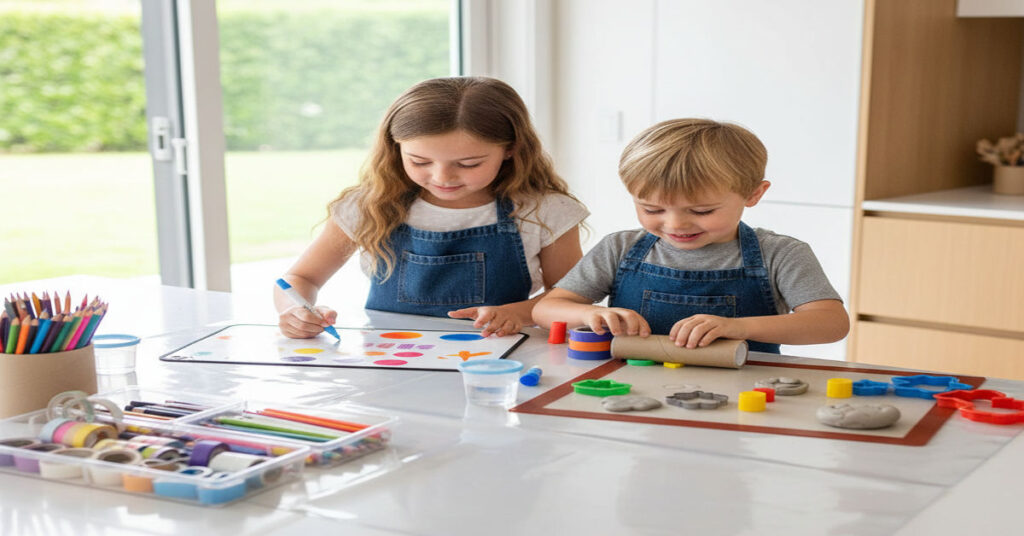
Art projects for kids begin with a simple idea and everyday objects — from paper and stickers to cardboard and contact paper — turning ordinary afternoons into creative laboratories. Young children especially thrive when they can express imagination through art and parents and educators alike increasingly seek activities that are both developmentally rich and low‑mess. Parents will find actionable inspiration fun, intuitive projects that build fine motor skills, encourage focus and allow kids to experiment with color, texture and process.
Art isn’t just fun — it’s a vital part of early development. Experts note that creative activities bolster hand‑eye coordination, strengthen finger muscles essential for writing, and provide an outlet for emotional expression. Fine motor tasks like sticking foam shapes, weaving paper or threading beads support precision and control, helping children progress toward school readiness. Such projects, whether done at home or in DIY sessions, make creativity approachable without requiring expensive supplies or a big cleanup afterward.
This article explores a mix of quick preschool crafts — like paper bag jellyfish and ice painting — and broader categories of art using everyday materials, along with expert insight into how these activities help children grow. You’ll find structured comparisons, real facts about developmental benefits, and guidance to make every creative moment meaningful and manageable.
The Developmental Power of Art at Home
Art activities do more than keep kids busy they contribute deeply to cognitive and physical development. According to pediatric sources, engaging in arts and crafts provides sensory exploration that stimulates understanding of color, texture and cause‑and‑effect relationships. Creative expression builds confidence and emotional well‑being as children navigate choices and witness results of their efforts.
Fine motor skills — critical for writing, cutting and daily self‑care — are strengthened through tasks like holding paintbrushes, tearing paper into pieces, or placing stickers precisely. These seemingly simple actions train finger dexterity and bilateral coordination, preparing young hands for more complex tasks.
At home, parents can adapt activities according to age and tolerance for mess. For toddlers, foam shape pictures or masking tape designs deliver creative results with minimal cleanup. Older kids can enjoy magazine collages or bubble wrap printing for textured abstracts. Supporting creativity with accessible materials helps foster problem‑solving, persistence, and pride in creation — key outcomes that echo long beyond a single session.
Everyday Materials, Endless Possibilities
Many of the most engaging art projects use items already on hand — no special trip to the craft store needed. The following table groups activities by material type and developmental focus:
| Material | Example Activity | Skills Developed |
| Paper/Board | Woven rainbow fish, paper plate snakes | Fine motor, bilateral coordination |
| Cardboard | Cardboard sculptures, recycled robot figures | Spatial reasoning, creativity |
| Stickers/Contact Paper | Sticker mandalas, stained‑glass collages | Hand‑eye coordination, pattern recognition |
| Textured Items | Bubble wrap printing, magazine collages | Sensory exploration, composition |
Household items become tools of discovery. Contact paper and tissue scraps introduce kids to color blending without glue. Magazine collages encourage decision‑making and composition as children cut and arrange images into new scenes. Cardboard boxes transform into imaginative vehicles or creatures, reinforcing creative thinking and symbolic play.
To structure creative time at home, consider rotating materials and themes weekly — a strategy that keeps ideas fresh and offers varied sensory experiences that feed both curiosity and developmental growth.
Quick, Mess‑Free Projects for Busy Parents
Parents often want creative outlets that don’t result in hours of cleanup. Fortunately, many art activities can be designed to contain mess and still produce satisfying results.
Here’s a comparison of mess‑free art ideas suitable for different age groups:
| Activity | Age Range | Setup | Cleanup Level |
| Sticker scenes | 2–6 | Very low | Very low |
| Contact paper stained glass | 3–8 | Low | Low |
| Masking tape masterpieces | 1–5 | Very low | Very low |
| Scratch art cards | 3–8 | Low | Low |
| Bubble‑bag squish painting | 3–6 | Medium | Medium |
Sticker and contact paper art let children arrange shapes on a surface without glue or paint, making them ideal for toddlers and preschoolers. Masking tape masterpieces — where tape is applied and peeled — turn tables or cardboard into patterns and images with essentially zero cleanup. Scratch art cards reveal bright colors hidden beneath a black layer, offering sensory delight without paint spills.
For slightly older children, bubble‑bag squish painting provides dual sensory and artistic engagement; sealing paint within a bag lets kids mix and spread color simply by manipulating the bag. These projects satisfy creative urges while keeping mess contained — a win for parents and caregivers.
Voices from Educators and Development Experts
Experts across child development fields underscore the value of art not only for creativity but for foundational skills:
“Open‑ended art experiences give children the opportunity to explore ideas without fear of judgment or failure,” says Early Childhood Today, emphasizing the intrinsic value of creative play that doesn’t focus on outcome. (Early Childhood Today, n.d.).
According to Parents magazine, choosing the right materials — like washable markers or foam stickers — enhances engagement while minimizing stress for families. (Parents, 2025).
Developmental research highlights that tactile art activities like collage and textured printmaking build neural pathways involved in fine motor control and problem solving. (Smith, 2023).
These insights reinforce that art projects are more than entertainment — they are experiences with measurable benefits for young minds and bodies. (Smith, 2023; Parents, 2025; Early Childhood Today).
Planning Creative Sessions with Purpose
Routine and structure can turn sporadic craft time into meaningful learning sessions. Consider a simple plan for a weekly art session:
- Theme Selection: Pick a theme (e.g., nature, animals, shapes) to provide focus.
- Material Prep: Lay out items in bins or trays so kids can select independently.
- Demonstration: Briefly show a technique, then step back and let children explore.
- Reflection: Talk with kids about their creations — colors, decisions, feelings.
- Display: Create a “gallery” space to celebrate finished pieces.
This rhythm supports autonomy and reflection, turning casual crafting into enriched experiences that build language, cognition, and confidence.
Takeaways
- Everyday household items can be transformed into impactful art projects that build creativity and motor skills.
- Mess‑free options like stickers, contact paper, and scratch art provide creative outlets with minimal cleanup.
- Art activities enhance fine motor strength, hand‑eye coordination, and cognitive development.
- Structured creative time can foster focus, problem‑solving, and self‑expression.
- Rotating materials and themes keeps art engaging and developmentally rich.
Conclusion
Art projects for kids using household materials are a fertile intersection of creativity, development, and practicality. By harnessing simple items — paper rolls, stickers, cardboard, contact paper — and pairing them with thoughtful setup and reflection, caregivers can foster environments where children explore, experiment and express themselves without overwhelming mess or stress. These activities do more than produce colorful creations; they cultivate skills that ripple into school readiness, emotional resilience, and lifelong curiosity. When mess is minimized and intention is maximized, art becomes a joyful and meaningful part of everyday learning — an Art Projects for Kids invitation to pause, make, and marvel at children’s ingenuity.
FAQs
What age groups benefit most from Art Projects for Kids with household items?
Art activities can be adapted for toddlers to school‑age kids; simple tasks suit younger children, while complex projects engage older ones. Tailor materials to abilities.
How do mess‑free art projects improve fine motor skills?
Projects involving peeling stickers, arranging shapes, or manipulating tools refine hand coordination and finger strength essential for writing and daily tasks.
Can art projects help with emotional development?
Yes, creative expression offers emotional outlets, builds confidence, and helps children articulate feelings through visual language.
What household items are best for DIY art?
Paper, cardboard, stickers, contact paper, bubble wrap, magazines, and recycled containers are versatile and readily available.
How often should kids engage in art activities?
Regular sessions — even brief weekly routines — support ongoing development, creativity, and skill refinement.
References
- World Economic Forum. (2021, February). What are the benefits of doing art activities with children? World Economic Forum. https://www.weforum.org/stories/2021/02/art-activities-children-improves-development-research/
- Meet The Masters. (n.d.). Top 8 benefits of kids experiencing art. Meet The Masters. https://meetthemasters.com/top-8-benefits-of-art-curriculum-for-students/
- Beacons Family FUNdation Society. (n.d.). Benefits of art for kids. Beacons Family FUNdation. https://www.beaconsfamilyfundation.org/benefits-of-art-for-kids.html
- Balvatika Preschool. (2025). Arts and crafts for kids: Creative projects and benefits. Balvatika Preschool. https://www.bragnam.in/arts-and-crafts-benefits-for-child-development/
- Reddit. (2022, January 14). Benefits of taking a pottery class in Portland for children [Discussion post]. Reddit. https://www.reddit.com/r/u_artworldschool/comments/s3pcn3/benefits_of_taking_a_pottery_class_in_portland_for/