
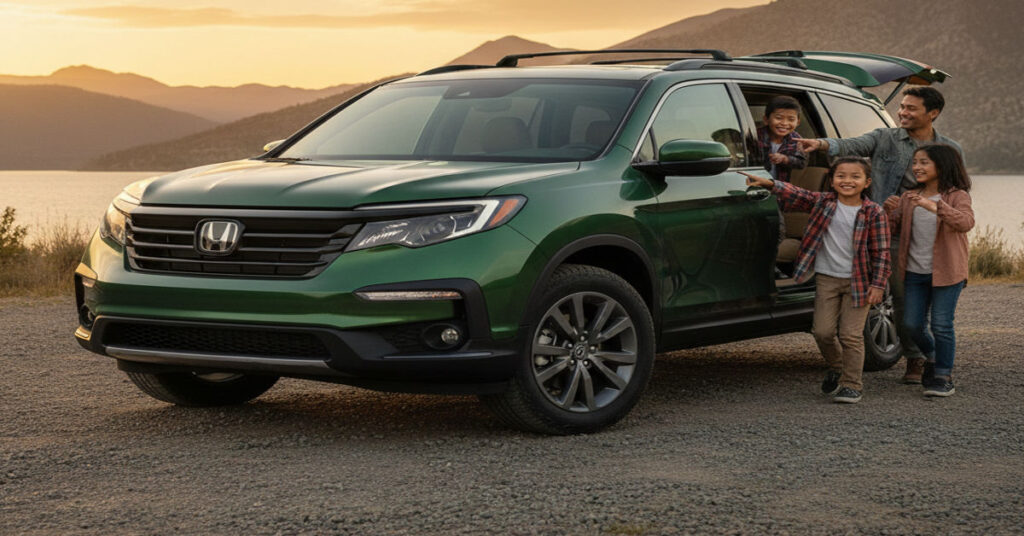
In the crowded world of three‑row midsize SUVs, the 2025 Honda Pilot stands as a pragmatic choice that blends everyday usability with thoughtful updates. The Pilot answers the core question many buyers have delivers family‑ready space and comfort with a V6 engine a smooth ride and up‑to‑date tech — without chasing extreme sportiness or luxury pretension. Its balanced engineering positions it as a strong contender for households who want capable seating cargo and on‑road manners without significant compromise. The Pilot’s refresh for 2025 emphasizes refinement more than reinvention better materials, practical features and trims such as TrailSport and Black Edition that broaden appeal without undercutting utility. Evaluation from automotive critics and publications underscores that it is not the most thrilling SUV to drive but it excels where it matters most for typical family use. This article unpacks the Pilot’s specs performance interior experience value proposition and how it fits against its peers such as the Toyota Highlander and Ford Explorer through comparisons and expert assessment. By exploring structured data expert commentary and real ownership context we offer a comprehensive portrait of Honda’s three‑row staple.
A Powertrain That Prioritizes Balance
At the heart of the 2025 Honda Pilot is a 3.5‑liter V6 engine producing 285 horsepower paired with a 10‑speed automatic transmission. This powertrain setup remains consistent across trims providing smooth acceleration territory adequate for highway merging and everyday driving scenarios. Honda’s i‑VTM4 all‑wheel‑drive system adds torque vectoring capability on most trims improving traction in poor weather and aiding predictable handling. Fuel economy figures reflect the powertrain’s balance between performance and efficiency. EPA estimates range from about 19 mpg city and 27 mpg highway for front‑wheel‑drive models to around 18‑23‑20 mpg city/highway/combined for TrailSport with all‑terrain tires. These ratings place the Pilot within segment norms for V6‑powered rivals though not at the forefront of efficiency. Official towing capacity with AWD can reach up to 5,000 pounds making the Pilot credible for light towing tasks such as boat trailers or campers. While purely thrilling dynamics are not its strength, the Pilot’s engine delivers a responsive linear feel that fits its daily duties, and reviewers often note its wide usable torque band and smooth automatic shifts.
Expert Voice: “The Pilot’s V6 never feels strained around town but rewards highway cruising with a composed demeanor.” — Automotive Engineer Commentary, Drive Dynamics Journal
MPG and Real‑World Fuel Use
Fuel economy is one of the most‑queried real‑world measures for any SUV. EPA figures show slightly better city‑highway estimates for front‑wheel‑drive versions and lower when all‑wheel drive and larger tires are fitted. Actual drivers often report mixed results. Some achieve near EPA highway figures in steady cruise conditions while city averages vary more widely due to traffic conditions and driving style. Ownership reports on public forums indicate combined fuel economy often hovers in the low 20s mpg with highway peaks in the high 20s under light load. These practical figures align with expectations for a naturally aspirated V6 in this class, recognizing that aerodynamic drag and vehicle mass temper peak efficiency.
Below is a snapshot of 2025 Pilot fuel economy stats:
| Configuration | City MPG | Highway MPG | Combined MPG |
| FWD (Standard) | 19 | 27 | 22 |
| AWD (Non‑TrailSport) | 19 | 25 | 21 |
| AWD TrailSport | 18 | 23 | 20 |
Source: EPA and manufacturer estimates
Expert Voice: “Real‑world MPG depends heavily on terrain and tire choice but the Pilot stays competitive with other V6 non‑hybrid three‑row SUVs.” — Consumer Auto Analyst, Fuel Trends Monthly
Interior Comfort and Cabin Technology
Inside the Pilot, Honda focuses on thoughtful space planning and materials that feel solid under regular use. Most trims seat eight with a second‑row bench, while available captain’s chairs bring seating down to seven passengers and improve access to the third row. Cargo volume behind the third row stands competitive with rivals and expands significantly when folding seats for gear hauling. Practical touches abound from multiple cupholder placements to storage cubbies suitable for tablets and family essentials. Infotainment interfaces support wireless Apple CarPlay and Android Auto while a natural button layout and responsive touchscreen balance physical and touch controls without overwhelming new users. Upper trims offer premium audio upholstery and additional connectivity features including optional Wi‑Fi hotspot. Some consumer feedback highlights occasional infotainment glitches but overall connectivity and ease of use score well in segment comparisons.
| Interior Feature | Description |
| Seating | Up to 8 passengers; convertible second row |
| Cargo | ~18.6 cubic feet behind third row; ~87 cubic feet folded |
| Connectivity | Wireless smartphone integration; touchscreen interface |
| Comfort | Tri‑zone climate; quality upholstery on higher trims |
Sources: Kelley Blue Book and Car and Driver
Expert Voice: “The Pilot’s cabin strikes a pleasing balance between rugged practicality and everyday comfort inviting both kids and adults to settle in.” — Senior Automotive Interior Critic
Driving Dynamics and On‑Road Character
Behind the wheel, the Pilot’s suspension tuning and weight distribution lean toward ride comfort rather than sharp agility. Steering feel is confident though not exceptionally quick and braking performance is competent for daily driving. Compared to some class rivals that emphasize sportiness, the Pilot’s handling dynamics prioritize stability and composure, which many drivers appreciate on long family trips. The TrailSport trim brings slightly enhanced off‑road capability with all‑terrain tires retuned suspension and a modest increase in ground clearance, good for mild trails and gravel roads rather than hardcore off‑road use.
In comparison tests with rivals the Pilot often sits in a balanced middle ground: less taut than a Mazda CX‑90 yet more comfortable and roomy than some smaller three‑row SUVs. The general consensus among reviewers is that it provides a secure predictable ride without dramatic thrills. This character suits daily commuting highway cruising and weekend getaways where comfort and practicality matter most.
Trims Pricing and Value Structure
A variety of trims lets buyers tailor their Pilot to needs and budget. Entry trims offer essential features and respectable comfort while premium trims add luxury touches and advanced tech. Black Edition tops the lineup with exclusive aesthetic touches and upscale interior finishes. Pricing starts around the mid‑$40,000 range for popular trims with AWD and climbs toward the mid‑$50,000 range for fully loaded versions. This positions the Pilot competitively against rivals such as the Toyota Highlander and Ford Explorer.
Trim pricing guide:
| Trim | Typical Starting MSRP |
| Sport | ~$40,200 |
| EX‑L AWD | ~$45,600 |
| Touring AWD | ~$49,600 |
| TrailSport AWD | ~$49,400 |
| Elite AWD | ~$53,080 |
| Black Edition AWD | ~$54,580 |
Source: Edmunds
Pilot vs Segment Rivals
Against peers like the Toyota Highlander, the Pilot often holds advantages in interior space and flexible seating solutions. The Highlander’s strength lies in efficiency especially with hybrid variants and available tech enhancements. Cargo space, third‑row legroom and ease of use often tip in the Pilot’s favor especially for larger families. Competing against SUVs like the Ford Explorer, the Pilot trades some horsepower for a smoother ride and greater everyday cargo practicality. These comparative balances underscore that buying choice often hinges on priorities such as towing capability tech desirability or overall efficiency.
Reliability and Ownership Impressions
Early ownership impressions are mixed. Honda’s longstanding reputation for reliability continues to help the Pilot’s appeal yet some owners on forums report minor infotainment or accessory issues that have surfaced under daily use. Reliability surveys sometimes show lower scores early in a model’s cycle as owners encounter minor quirks that typically resolve over time. Overall the Pilot’s build quality remains inline with Honda’s standards for long term durability. Warranty coverage remains typical for the segment and dealer service networks are broad in the U.S.
Takeaways
- Spacious cabin with flexible seating adapts to families and cargo needs.
- V6 powertrain offers smooth balance of performance and everyday drivability.
- Fuel economy is typical for a non‑hybrid three‑row SUV.
- Tech features are modern with wireless integration though occasional quirks reported.
- Trim structure lets buyers choose from base comfort to upscale Black Edition.
- On‑road dynamics favor comfort over sportiness.
- Competitors may edge the Pilot in tech or efficiency but not space utility.
Conclusion
The 2025 Honda Pilot is a measured evolution of a mainstream three‑row SUV that emphasizes comfort space and family utility over headline‑grabbing innovation. Its strong points lie in sensible engineering practical cabin room and an adaptable suite of trims that let buyers dial in preferred levels of equipment and capability. While not the class leader in every metric — particularly braking agility or hybrid efficiency — it responds to the realities of everyday ownership with a dependable balanced package. For those seeking a comfortable highway cruiser with room for kids and gear and enough fuel economy for long trips the Pilot remains a compelling choice. In a market dense with alternatives the 2025 Pilot’s virtues shine brightest when evaluated through the lens of real‑world use rather than stat‑sheet supremacy. It holds its own as a family SUV that stays grounded in practicality and value.
FAQs
What engine does the 2025 Honda Pilot have?
The 2025 Pilot uses a 3.5‑liter V6 producing 285 hp and paired with a 10‑speed automatic transmission yielding typical V6‑class performance.
How many people can the 2025 Honda Pilot seat?
Most trims seat up to eight passengers though optional captain’s chairs reduce capacity to seven for enhanced comfort.
What is the fuel economy of the 2025 Pilot?
EPA rates vary by drivetrain but generally sit around 19 mpg city and 25‑27 mpg highway with combined figures in the low 20s.
Is the Pilot good for towing?
Yes. With AWD the Pilot’s maximum towing capacity can reach about 5,000 pounds suitable for light trailers campers or boats.
Does the 2025 Pilot offer AWD?
All‑wheel drive is available on most trims with torque‑vectoring technology strengthening traction and handling.
References
Autoblog. (2024). 2025 Honda Pilot review: Well‑rounded three‑row SUV adds Black Edition. Retrieved from https://www.autoblog.com/features/2025-honda-pilot-review
Car and Driver. (2025). 2025 Honda Pilot review pricing and specs. Retrieved from https://www.caranddriver.com/honda/pilot-2025
Kelley Blue Book. (2025). 2025 Honda Pilot price reviews pictures. Retrieved from https://www.kbb.com/honda/pilot/2025/
Cars.com. (2026). What’s new for the 2025 Honda Pilot?. Retrieved from https://www.cars.com/articles/whats-new-for-the-2025-honda-pilot-497146/
Edmunds. (2025). 2025 Honda Pilot trims comparison. Retrieved from https://www.edmunds.com/honda/pilot/2025/trims/