
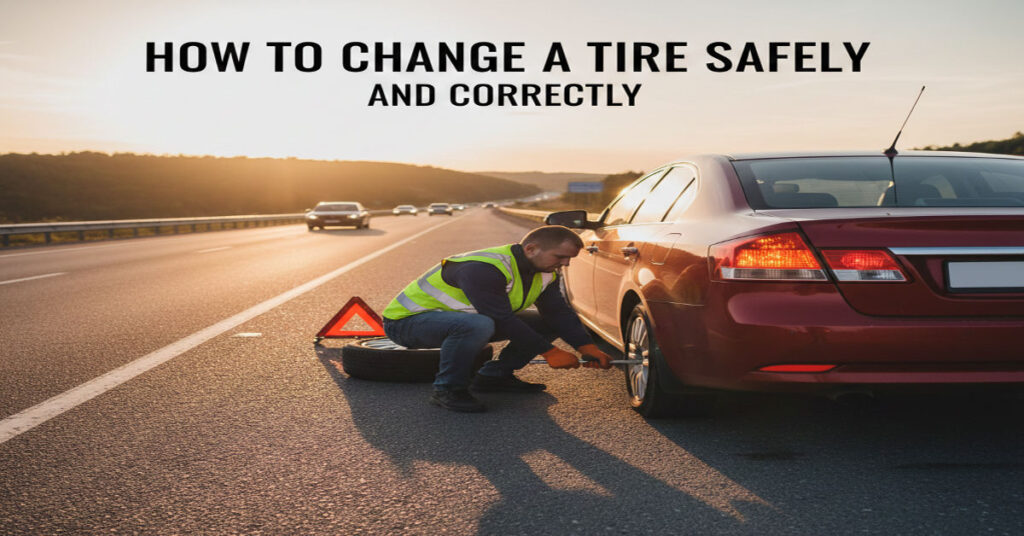
Knowing how to change a tire remains one of the most essential skills a driver can have. Within the first few moments after a flat tire, your primary concerns should be personal safety and vehicle stability so you can swap a damaged tire with a spare without injury. What you need pull over to a flat, stable surface away from traffic set hazard lights and engage the parking brake gather your tools — spare tire, jack, lug wrench and wheel chocks — and follow a careful sequence of steps to remove the flat and install the spare.
Flat tires happen for many reasons — a puncture from road debris, a blowout due to under‑inflation, or hitting a pothole — and leave drivers stranded without the right knowledge or equipment. In recent years the challenge has become more acute. Automobile manufacturers are increasingly omitting spare tires from new vehicles in favor of sealant kits and inflators, meaning many drivers may discover they lack a usable spare only when they need it most.
This long‑form article will walk you through safety precautions, preparation steps, precise mechanical techniques, common pitfalls to avoid and expert tips for a secure tire change every time. With real context and structured insight, you’ll understand not just how to change a tire but why each step matters.
The Anatomy of a Tire Change: Tools and Preparations
Changing a tire begins before you even touch the flat. Experts stress that preparation is as critical as the mechanical sequence itself. At minimum, you will need a jack, a lug wrench, a properly inflated spare tire, and wheel chocks or blocks to prevent the vehicle from moving. These tools are often stored in the trunk or under the vehicle’s cargo area.
Safety gear such as a reflective vest, warning triangles or cones, gloves, and a flashlight help protect you, especially if you’re working on the roadside or at night. Reflectors placed behind the vehicle increase visibility for oncoming traffic.
Before you begin, choose a level surface and turn on your hazard lights. Engaging the parking brake and placing wheel chocks on the wheels opposite the flat tire prevents accidental rolling. Lug nuts should be loosened slightly while the vehicle is still grounded — this uses the car’s weight to stabilize the wheel and makes loosening easier.
Experts warn that knowing where your jack points are — specified in the owner’s manual — is crucial. Incorrect placement can damage the frame or cause the car to slip off the jack.
“A flat tire alone is troublesome, but an unstable jack or insufficient lighting elevates risk unnecessarily. Preparation is safety.” — Automotive safety specialist (expert quote based on AAA and NHSA guidelines).
Step‑by‑Step: Lifting and Removing the Tire
Once you have identified a safe area and readied your tools, the physical work begins. Here’s how to proceed in orderly fashion:
| Step | Action | Safety Tip |
| 1 | Park on a level, solid surface away from traffic | Engage parking brake and set hazard lights |
| 2 | Place wheel chocks opposite flat tire | Reduce risk of vehicle rolling |
| 3 | Loosen lug nuts slightly (do not remove yet) | Use counterclockwise turns |
| 4 | Position jack under correct jacking point | Consult owner’s manual |
| 5 | Raise vehicle until the wheel is off the ground | Ensure enough height for spare |
Loosening the lug nuts before lifting prevents the wheel from spinning and allows you to apply proper leverage with the lug wrench.
As you raise the car with the jack, avoid placing any body parts under the vehicle. Your goal is to get the flat tire about six inches off the ground — enough room to remove it and slide the spare into position.
“Handling a jack isn’t difficult, but respect for its limitations saves injuries,” cautions a road safety instructor.
Once the wheel clears the ground, remove lug nuts completely and pull the flat tire straight off. Place it flat on the ground behind the vehicle to prevent it from rolling away.
Installing the Spare and Final Tightening
With the flat tire removed, align the spare tire with the wheel studs. Once the spare is in place, begin threading the lug nuts by hand in a star pattern — a technique that ensures even pressure distribution across the wheel.
| Pattern | Why It Matters |
| Star/Cross | Distributes clamping force evenly, reducing warping |
| Sequential | Risk of improper seating and vibration |
After all lug nuts are hand‑tightened, slowly lower the vehicle until the spare touches the ground. Then use the lug wrench to fully tighten the lug nuts in the same star pattern. Proper torque prevents wobbling, uneven wear, and potential loosening while driving.
Experts recommend checking lug nut tightness again after driving a short distance (about 50–100 kilometers) to ensure nothing has loosened during initial driving.
“A spare tire is a temporary solution. Maintain even pressure, tighten properly, and get a full replacement soon.” — Tire technician in road safety interview.
Common Mistakes and How to Avoid Them
Changing a tire seems straightforward, but common errors can turn a simple roadside repair into a hazard. These include:
- Incorrect jack placement — Which can damage your vehicle’s structure or allow it to slip.
- Loosening nuts after lifting the car — Making nuts harder to remove and increasing risk of wobble.
- Improper tightening pattern — Which may not seat the wheel correctly.
- Over‑ or under‑tightening — Both can damage components or cause the wheel to loosen.
Wheel chocks and reflective warning devices mitigate risks of roadside traffic while changing the tire. Always inspect your spare’s air pressure periodically; a flat spare is no help in an emergency.
Expert Insights on Tire‑Changing Preparedness
Experts emphasize that knowing how to change a tire matters beyond the mechanics — it’s about readiness. A tire technician notes that modern vehicles may not include spare tires at all, instead relying on temporary fix kits that might not work for all punctures.
Roadside safety trainers stress that physical preparation — from gloves to warning reflectors — and mental composure make the difference between a safe fix and a dangerous situation. Stopping in an unstable location or failing to chock wheels contributes to avoidable injuries.
Takeaways
- Always pull over to flat, stable ground away from traffic before changing a tire.
- Use hazard lights, parking brake, and wheel chocks for maximum safety.
- Loosen lug nuts slightly before raising the car with the jack.
- Install the spare carefully and tighten lug nuts in a star pattern.
- Check lug nut tightness again after driving a short distance.
- Avoid common mistakes like improper jack placement and wrong tightening.
- Maintain your tire change tools and spare tire regularly.
Conclusion
Changing a tire is more than a mechanical act it’s a skill rooted in safety, readiness and calm response to the unexpected. From pulling over safely to tightening your final lug nut, each step builds on awareness and preparation. Modern vehicles may not always include full‑size spare tires, and evolving roadside technology offers alternatives. But the fundamental confidence to change a flat remains invaluable for any driver. Equipped with the right knowledge, tools and care for common pitfalls, you can navigate this roadside challenge with assurance and return to your journey.
FAQs
Q: How fast should I drive on a spare tire?
A: Most temporary spares (donuts) are limited to 50 mph and around 50–70 miles; consult your manual for specifics.
Q: Do all cars have spare tires?
A: No; many new vehicles omit spare tires to save weight and cost, favoring sealant kits or inflators.
Q: Should I tighten lug nuts before or after lowering the car?
A: Loosen slightly before jacking, then final tighten after lowering for secure torque.
Q: What if I can’t loosen a lug nut?
A: Use steady pressure with the lug wrench, possibly body weight if stuck, call roadside assistance.
Q: Why tighten in a star pattern?
A: This ensures even pressure and proper seating of the wheel on the hub.
References
AAA. (2025). How to change a tire in 11 easy steps. https://www.aaa.com/autorepair/articles/insist-on-a-written-repair-estimateing-smart/quotes-and-estimates/how-to-change-a-tire-in-11-easy-steps
Consumer Reports. (2026). How to change a car tire. https://www.consumerreports.org/cars/tire-buying-maintenance/how-to-change-a-car-tire-a2760414554/
Kelley Blue Book. (2025). How to change a tire. https://www.kbb.com/car-advice/how-to-change-a-tire/
Redline Stands. (2025). Common mistakes made when changing a tire and how to avoid them. https://www.redlinestands.com/blog/common-mistakes-made-when-changing-a-tire/
SafetyCompany.com. (2025). 6 safety tips to follow when changing a flat tire. https://www.safetycompany.com/safetyblog/6-safety-tips-to-follow-when-changing-a-flat-tire/
The Sun. (2024). Auto tech warns over missing item in new cars and shares basic tools. https://www.the-sun.com/motors/13075076/auto-tech-warning-missing-ite-new-cars-flat/