
Weeds seem to arrive everywhere at once, like uninvited guests who know the best hiding spots. Learning how to get rid of weeds is less about brute force and more about understanding their strategies. At their core, weeds are opportunists. They thrive in bare soil, exploit gaps between plants and germinate quickly when sunlight and moisture align. Getting ahead of them means reading the garden like a system rather than reacting to each sprout as it appears.
In observing gardens from community plots to country homesteads, the most successful weed control I have seen always blends timing, prevention and respect for plant ecology. Instead of waiting for weeds to flower and seed, gardeners who watch soil moisture patterns and plant behavior dramatically reduce weed pressure before it becomes overwhelming. In the end the work shifts from chasing weeds to cultivating a resilient plant community where weeds lose both space and light to emerge.
Beyond Pulling: Why Weed Biology Matters
Weeds compete fiercely for water, nutrients and light. Scientific research shows that weeds impact crop growth and yield because they often establish before desired plants do, and once established they are difficult to displace without disturbing the soil further, which ironically encourages more weed germination. Effective weed control thus starts with biology, not brute force.
Gardeners often reach for a hoe or sprayer without considering timing. Pulling weeds after rain when the soil is loose helps remove entire roots, especially for perennial species. Physical weed control is centuries old; before herbicides most gardeners hoed or hand‑pulled weeds and left their roots exposed to dry or decompose, starving them of regrowth momentum.
Prevention Through Soil and Cover
Prevention transforms weed time into productive time. Techniques like stale seed bed preparation, where the soil is encouraged to sprout weed seeds before planting so they can be removed, reduce the seed bank for the rest of the season.
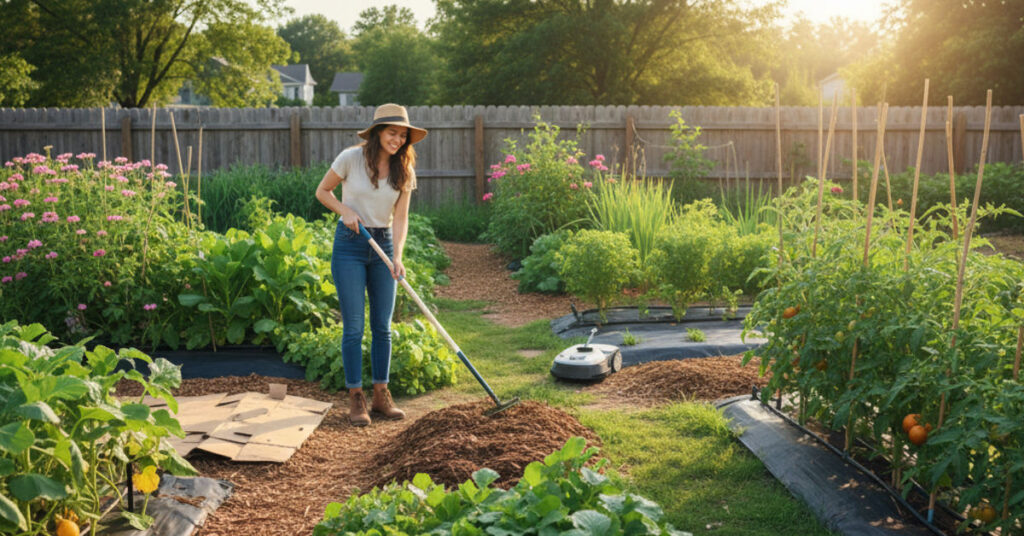
Continuous soil cover also limits weed emergence. Organic mulches reduce light reaching the soil, which interrupt weed germination cues and help preserve soil moisture. Research supports mulching as a weed suppression tool across settings, especially when layers are uniform and prevent soil from baking dry.
Sheet mulching goes further by burying existing weed roots and seeds under layers of cardboard or biodegradable material, mimicking forest floors and creating fertile planting zones with minimal future weed pressure.
These approaches work with ecological processes to shift weed emergence patterns rather than simply responding to them.
Garden‑Friendly Strategies That Work
Practical, garden‑centered weed control blends research‑backed tactics with creativity:
1) Dense plantings and competitive cover
Planting companion species that fill space quickly reduces bare soil where weeds thrive. Ornamental groundcovers, clover mixes or fast‑growing vegetables can suppress weed growth by intercepting light and occupying root space early in the season.
2) Thermal and physical disruption
Using heat from boiling water or flame weeders can collapse weed tissues without chemicals. This disrupts young annual weeds effectively on patios or paths, but caution is needed to avoid damage to desired plants or surfaces.
3) Soil solarization
In warm seasons, covering beds with clear plastic traps solar energy and raises soil temperatures high enough to weaken nearly all seed bank weed species. This method can significantly reduce weed pressure before planting.
4) Organic suppression tactics
For gardeners preferring chemical‑free systems, integrating cultural practices like crop rotation, mulching and careful soil fertility management limits weed advantage while supporting desired crops. Organic weed management protocols emphasize minimizing soil disturbance and enhancing crop competitiveness.
How to Get Rid of Weeds strategies highlight deep connections between ecological systems and successful weed management.
A Table of Methods and Their Roles
| Strategy | Best For | Key Benefit |
| Dense planting / companion cover | Vegetable beds, flower gardens | Limits bare soil where weeds emerge |
| Mulching | Established beds | Suppresses weed germination, improves moisture |
| Stale seed bed | Pre‑planting | Reduces seed bank before crops |
| Soil solarization | Warm climates | Kills weed seeds and pathogens |
| Thermal weed control | Hardscape areas | Kills seedlings without herbicides |
When You Need Tools but Not Toxins
Many gardeners reach for shop‑bought herbicides without considering side effects. Chemical herbicides often work by interrupting plant growth systems, but in doing so they can affect soil biology, beneficial insects and nearby plants. In organic and low‑input systems, reliance on biological weed control such as suppressive mulches and targeted physical methods aligns both yield goals and environmental health.
The choice of method often reflects values as much as soil conditions. Home growers mindful of pollinators or soil ecology may accept slightly slower How to Get Rid of Weeds suppression in exchange for a healthier long‑term garden system.
The Long View: Weed Dynamics and Garden Culture
Weeds are not static problems. They evolve based on gardening practices. Systems thinking suggests that repeated soil disturbance, like frequent tilling, prompts more weed emergence by bringing dormant seeds to the surface. Adopting no‑till or minimal‑till approaches thereby reduces the cycle of weed germination and regrowth.
Weed management also intersects with cultural practices. In community gardens, the stories of gardeners who abandoned constant pulling in favor of dense, living groundcovers reveal a shift: the garden becomes a collaboration of plants rather than a battlefield. Many experienced growers talk less about “fighting weeds” and more about “choosing plant communities.” How to Get Rid of Weeds mindset change may not reduce weeds overnight, but it reorients effort toward long‑term resilience.
Best Practices to Start Today
- Plant faster‑growing groundcovers where weeds appear first
- Apply organic mulch in thick, uniform layers each season
- Practice stale seed bed preparation before sowing crops
- Use thermal methods like boiling water for weeds in hardscape zones
- Minimize soil disturbance to prevent buried seeds from emerging
Creative Weed Wisdom: Stories from Growers
Some gardeners describe weeds as teachers, revealing where the soil is empty, nutrient‑poor or neglected. When they listen, the weeds point to designs that need strengthening. One permaculture‑influenced grower described sheet mulching an overgrown patch not as a weed retreat but as an invitation for a more diverse plant guild that now thrives with almost How to Get Rid of Weeds required. These narratives reflect how weed control strategy shapes garden culture, not just soil surfaces.
FAQs
What is the single most effective weed deterrent?
Continuous soil cover through dense planting and mulching reduces germination opportunities more than any single removal method.
Will boiling water kill weeds permanently?
Boiling water damages young weeds effectively but may not eliminate deep roots unless repeated or combined with other approaches.
Does solarization work in all climates?
Soil solarization works best in warm, sunny conditions where soil temperatures can stay high for weeks.
Can you use these methods in vegetable gardens?
Yes, strategies like mulch, stale seed bed preparation and competitive planting are widely recommended for organic vegetable systems.
Are weeds bad for soil health?
Not always. Some weeds improve soil structure or indicate nutrient imbalances, but when they outcompete crops they need strategic control.