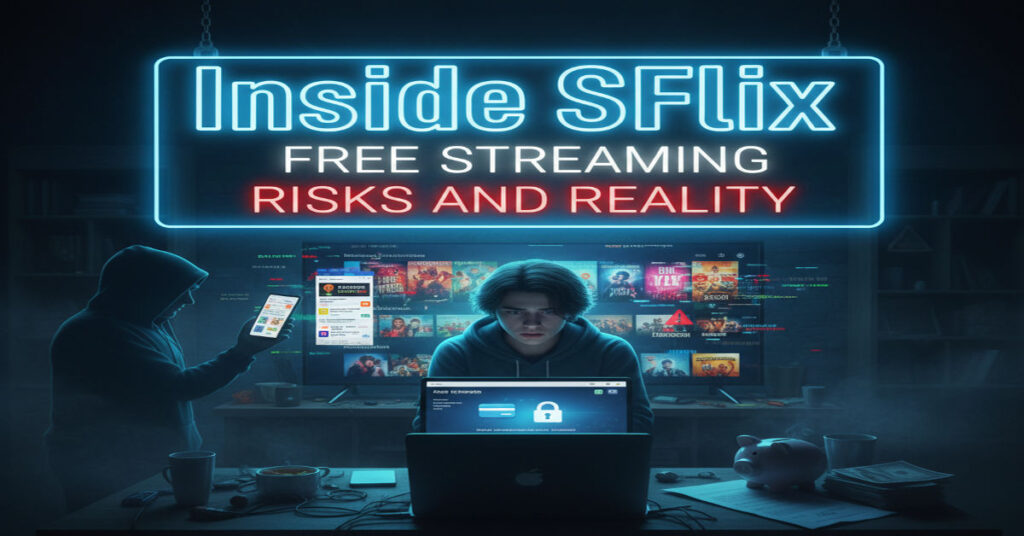
In the crowded digital landscape of online video, one name continues to surface among curious searchers and casual viewers alike: SFlix. In the United States alone, “sflix” draws an estimated 450,000 monthly searches and related sites like sflix.to rank high in interest and traffic, reflecting widespread curiosity about a platform that promises free HD movies and TV shows without subscriptions or accounts. At first glance, that promise seems irresistible instant access to entertainment without membership fees, passwords or credit cards. But what lies behind the slick interface has become an increasingly complex question of legality, safety and sustainability.
SFlix and its many mirror domains have captured significant user attention because they eliminate many of the barriers associated with paid services, making it simple to stream content across devices with just a click. For many users, this ease of access fills a demand for entertainment outside the walled gardens of mainstream platforms. Yet beneath the attractive façade of free access, SFlix operates without owning the distribution rights to most of its content. That reality places it squarely in a legal gray zone in many countries and invites scrutiny from copyright holders and law enforcement alike.
Moreover, the very features that contribute to its popularity also harbor risks aggressive advertising networks, frequent domain changes to evade restrictions, and a decentralized network of third-party links that can expose users to malware, intrusive ads and privacy threats. From an industry standpoint, these characteristics align SFlix not with licensed, regulated services but with a lineage of unlicensed sites that have drawn enforcement actions around the world. Understanding this dual identity — free and alluring yet legally and technically precarious — is essential for anyone considering using the platform.
What Is SFlix and Why Has It Grown So Popular?
At its core, SFlix is a free online platform that provides access to movies, TV shows and other video content in HD quality without requiring users to register, subscribe or pay anything. The site’s popularity owes much to this lack of friction: users can simply visit a functioning domain, search for a title and begin streaming almost instantly. This ease has driven significant interest online, especially among users seeking cost-free alternatives to subscription-based services.
Unlike licensed platforms such as Netflix or Disney+, SFlix does not host the content itself. Instead, it aggregates links from third-party servers and embeds them for playback. This enables a vast and regularly updated library but also means that SFlix lacks the legal rights to distribute the material it makes available. Because of this, the platform operates in a legally gray or outright unauthorized space in many jurisdictions.
Several factors account for SFlix’s broad appeal. First, the absence of payment barriers resonates with viewers who may not be willing or able to pay for multiple subscriptions. Second, the platform often surfaces recent releases faster than many legal services, though this reflects the unlicensed nature of its sources. Third, its lightweight, ad-friendly interface is easy to use across devices, from desktop browsers to mobile phones and tablets.
Yet these advantages come with steep trade-offs: unstable domains that change often to avoid takedowns, inconsistent video quality and a reliance on advertising networks that may serve intrusive or harmful ads. Additionally, the lack of verified licensing exposes users to potential copyright issues. These realities complicate the narrative of SFlix as simply “free entertainment,” blending convenience with uncertainty.
Legal and Ethical Dimensions of Streaming on SFlix
Legal Status of SFlix Across Regions
| Region | Legal Status | Enforcement Level |
| United States | Illegal (copyright violation) | High |
| European Union | Illegal, monitored | High |
| UK | Illegal, active enforcement | High |
| Canada | Illegal, moderate enforcement | Medium |
| Some other countries | Varies, enforcement lax | Low to Medium |
(Sources: legal analyses and copyright enforcement reports)
From a legal standpoint, the distribution of copyrighted content without proper licensing infringes intellectual property laws in many countries. In the U.S., unauthorized streaming violates the Digital Millennium Copyright Act, which has provisions for takedowns and penalties for distribution of unlicensed content. In Europe, national regulators such as ARCOM in France and the UK’s IP Crime Unit actively monitor and block access to piracy sites. Other regions impose varying levels of enforcement, but the underlying principle remains consistent: streaming unlicensed content is unauthorized and potentially actionable.
This has direct implications for users of SFlix. Although viewers are less commonly prosecuted than operators, legal consequences can include ISP warnings, fines or even service suspensions in jurisdictions with strict enforcement. Moreover, engaging with unlicensed platforms undermines the economic ecosystem that supports creators, from actors and writers to technical crews whose work is monetized through legitimate distribution channels.
The ethical dimension of SFlix usage is similarly nuanced. While the low barrier to access might feel democratizing, it effectively bypasses the business models that fund the content being consumed. When viewers use sites like SFlix, they participate in a system that does not compensate those who created the work. This dynamic has tangible impacts on the sustainability of creative industries and raises broader questions about fairness and respect for intellectual property.
User Safety: Security, Privacy and Tech Risks
Beyond legality, safety concerns are central to any discussion of SFlix. Because SFlix and its mirrors rely on third-party advertising and redirect networks to generate revenue, users frequently encounter intrusive ads, pop-ups and redirects that can expose devices to malware or phishing schemes. Even if the main site seems benign, embedded scripts or forced redirects may lead to unsafe pages.
Security analysts have documented significant increases in malware incidents linked to illegal streaming domains, with reports of ad networks delivering harmful ads or scripts that attempt to install unwanted software. These risks are particularly acute when users interact with elements beyond the primary stream player or click on external ads.
Additionally, privacy is a concern. SFlix does not typically operate under transparent privacy policies, meaning that IP addresses, browsing behaviors and device details may be logged by third-party networks. This data can be used for targeted advertising or, in worst cases, fall into the hands of malicious actors.
Security experts generally recommend that users avoid unlicensed streaming sites altogether. If users choose to engage with platforms like SFlix, precautions such as VPNs, ad blockers and antivirus software can mitigate, but not eliminate, the underlying risks. Even then, these tools do not address the core issue of legality or guarantee complete safety.
SFlix Domains, Mirror Sites and User Experience
One distinctive feature of SFlix’s ecosystem is the proliferation of mirror domains. Because authorities and copyright holders regularly target and shut down unlicensed sites, SFlix operators often shift to new URLs or mirror configurations to maintain accessibility. Commonly reported domains include sflix.to, sflix.ltd, sflix.net.im and others, though these change frequently.
This shifting landscape creates challenges for users. Broken links, inconsistent availability and frequent buffering are common complaints, as documented in community forums and user reviews. Even when a domain appears to work, the quality of streams can vary widely depending on the underlying source server.
User feedback paints a mixed picture: some praise the breadth of content and the absence of payment requirements, while others report intrusive ads, slow loading times and unresponsive links. Reviews on public platforms like Trustpilot reflect both enthusiasm for the selection and frustration with usability and safety issues.
These dynamics underscore both the appeal and the volatility of SFlix: it offers abundant free content but lacks the reliability and stability of licensed services, leaving users to navigate a shifting environment of links and risks.
Two Key Comparisons
SFlix vs Legal Streaming Services
| Feature | SFlix | Legal Platforms (e.g., Tubi, Netflix) |
| Cost | Free | Free (ad-supported) / Paid subscription |
| Licensing | No | Yes |
| Content Ownership | Third-party links | Licensed catalog |
| Security | High risk | Low risk |
| Ad Experience | Intrusive | Managed/regulated |
(Based on current industry and security reports)
Legal Free Streaming Alternatives
| Platform | Type | Key Benefits |
| Tubi TV | Free, ad-supported | Large catalog, licensed content |
| Pluto TV | Free, ad-supported | Live channels + on-demand |
| Crackle | Free, ad-supported | Movies, shows, originals |
| Plex | Free, some paid | Free movies + media server features |
(Compiled from legal streaming guides)
Expert Perspectives
“Free streaming sites like SFlix operate without the licenses that underpin the modern digital media industry. That lack of rights means users are accessing unverified content, which carries both legal and security implications.” — Media law specialist in intellectual property.
“From a cybersecurity standpoint, sites that embed third-party links and rely on ad-networks frequently expose users to harmful scripts and malicious redirects — that risk is well documented.” — Cybersecurity analyst.
“While the appeal of free content is understandable, there are robust legal alternatives that provide safe, licensed movies and shows without cost, supported by ads rather than piracy.” — Streaming industry commentator.
Takeaways
• SFlix offers free streaming without sign-ups, driving high user interest and convenience.
• It operates by linking to third-party servers and lacks distribution licenses, placing it in an unauthorized category in many regions.
• Users may face legal risks, including ISP warnings and potential fines, depending on local laws.
• Security concerns include intrusive ads, pop-ups and potential malware exposure.
• Mirror domains often change, leading to instability and inconsistent user experience.
• Legal, ad-supported alternatives provide safe, licensed content without cost.
• Protective tools like VPNs and ad blockers can mitigate risks but do not resolve legal issues.
Conclusion
SFlix occupies a fascinating corner of the digital streaming ecosystem wildly popular, widely searched and readily accessible without barriers, yet fraught with legal gray zones and security concerns. For many users, the allure of free HD entertainment outweighs these issues, especially when compared to monthly subscription fatigue. But the convenience comes at a cost — not just in terms of potential malware or intrusive ads, but in legal and ethical dimensions that ripple far beyond the moment of viewing.
As copyright enforcement intensifies globally, the long-term viability of unlicensed streaming sites like SFlix is questionable. Domain takedowns, ISP blocks and legal actions will likely continue to shift the landscape, forcing users to adapt or reconsider their choices. Meanwhile, legal free platforms such as Tubi and Pluto TV demonstrate that audiences can enjoy movies and shows without compromising safety or legality.
In the end, the story of SFlix is not just about a website that streams films for free; it’s about how audiences, technology and law intersect in a digital age. Entertainment may be more accessible than ever before, but accessibility without accountability remains a complex trade-off.
FAQs
Is using SFlix legal?
In most countries, streaming unlicensed content is unauthorized and may violate copyright laws; legal risks vary by region.
Can using SFlix expose my device to malware?
Yes, intrusive ads and third-party redirects linked from SFlix can expose users to malware and phishing threats.
Do I need an account to use SFlix?
No, SFlix generally requires no registration or subscription to stream content.
Are there safe legal alternatives to SFlix?
Yes, platforms like Tubi, Pluto TV and Crackle offer free, licensed streaming supported by ads.
Does a VPN make streaming on SFlix safe?
A VPN can protect privacy but does not eliminate legal issues or guarantee protection from malicious ads.
References
DevTechnosys. (2025). Everything You Need To Know About SFlix: The Free Streaming Platform Explained. Retrieved from https://devtechnosys.com/insights/sflix-explanation/
Quored. (2025). SFlix Review 2025: Features, Safety, Legality & Best Alternatives. Retrieved from https://quored.com/sflix/
Axis Intelligence. (2025). SFlix Review 2025: Critical Security Analysis and Safe Streaming Alternatives. Retrieved from https://axis-intelligence.com/sflix-review-2025-ultimate-security-analysis/
SFlix.to. (2025). SFlix – Watch HD Movies Online For Free. Retrieved from https://www.sflix.ltd/
TricTrac.tv. (2026). SFlix: New Working Site, Risks and Safe Alternatives. Retrieved from https://trictrac.tv/en/media/sflix/
TravlTheWestWay. (2025). What Is Sflix.to? A Deep Dive Into the Free Streaming Platform. Retrieved from https://travlthewestway.com/sflix-to/
SFlix Alternatives Bitbucket. (2025). SFlix | Best SFlix Alternatives & Safe Streaming Guide. Retrieved from https://sflix-alternatives.bitbucket.io/