
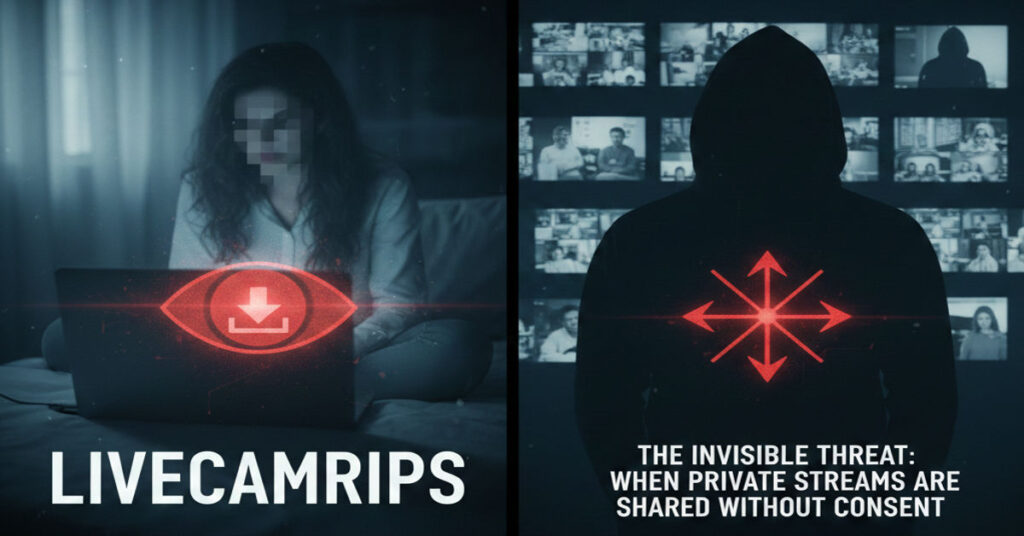
In recent years a shadow network of websites like Livecamrips and online services has emerged to archive, redistribute and index recordings made from live webcam streams beyond their original platforms. What begins as private or paid engagement between a performer and an audience can end up captured and reposted without consent on external domains where neither the creator nor the viewer expected permanence. Within the first hundred words of this article we will explain what drives public concern about these recordings why the issue matters to performers and what legal and cultural frameworks are shaping responses.
Unauthorized recording and distribution of intimate or adult content touches on consent privacy intellectual property and broader questions about how technology preserves or erodes individual control over one’s image and voice. Though the live streaming economy continues to grow internationally performers regularly report their material appearing without permission on third‑party sites outside the control of the original platform. This article unpacks how these recordings happen what harms they cause and how law and advocacy groups are seeking to protect privacy rights in a legal environment still catching up with digital realities.
Growing Technology Risks for Live Streams
Live streaming has become ubiquitous from education to entertainment but it poses unique risks when broadcasts involve intimate interaction. Any user with basic screen recording software can capture a live feed in real time then store or share that recording with others. Platform terms of service frequently include broad disclaimers that users assume all risk for the privacy of streams they create noting that privacy cannot be guaranteed. A spokesperson for a digital rights organization observed “When platforms disclaim responsibility for security it leaves creators exposed to misuse of their own work and personal image”.
Beyond non‑consensual recording there is the risk of personal data breaches. Sensitive personal information associated with performer accounts may be exploited for identity theft harassment or blackmail if security safeguards are inadequate. Performers can be targeted even when they intend to maintain anonymity because metadata or contextual clues in recordings can lead to de‑anonymization. The European Business Review has documented how unsecured streams and platforms that do not encrypt data contribute to these vulnerabilities.
Legal Frameworks Around Non‑Consensual Sharing
Across jurisdictions lawmakers have responded to the problem of non‑consensual intimate imagery with a patchwork of statutes known in some places as retaliation porn or image‑based abuse laws. In the United States the TAKE IT DOWN Act of 2025 makes it illegal to knowingly publish intimate visual material without consent and requires platforms to remove such material on notification typically within set time frames.
In India Section 66E of the Information Technology Act criminalizes the publication or transmission of a private image without consent, punishable by imprisonment and fines. Similar laws exist in many U.S. states such as California’s Penal Code which prohibits distribution of intimate images intended to cause distress.
A lawyer specializing in privacy law said “Consent for one form of distribution does not imply consent for all forms of redistribution. Legal protections focus on ensuring that individuals retain agency over where and how their likeness appears”. These laws vary greatly in scope definitions and penalties but they share a recognition that intimate content deserves enhanced protection.
Performers and Community Perspectives
Cam models and other live performers have long shared concerns about unauthorized recordings on Livecamrips. Research on webcam models highlights harassment privacy invasions and instances where performers’ real identities were revealed against their will, leading to cyber‑stalking or social harm.
One community advocate explains “Performers create content in a controlled environment with expectations about where it lives and who sees it. When recordings escape into the wild the dynamics of consent are fundamentally broken”. In online support groups many performers describe the ongoing challenge of issuing takedown notices for recordings that resurface repeatedly under new URLs. Community volunteers often help with cataloging links for removal requests though processes are time consuming and far from comprehensive.
Legal Protections for Non-Consensual Recordings
| Country/Region | Legislation | Scope of Protection | Enforcement Challenges |
| United States | TAKE IT DOWN Act (2025) | Criminalizes non-consensual intimate imagery; requires prompt takedown | Varies by state; slow cross-platform enforcement |
| India | Information Technology Act Sec 66E | Punishes publication of private images without consent | Limited awareness; digital policing uneven |
| Malta | Criminal Code Art. 208E | Prohibits disclosure of private sexual content | Small jurisdiction; enforcement depends on complaint |
| Germany | Criminal Code §201a | Protects privacy against unauthorized recording | Limited international reach; offshore websites exempt |
| California, USA | Penal Code §647(j)(1) | Non-consensual distribution of intimate images | Civil and criminal remedies exist but content often resurfaces |
Notes: Shows differences in legislation, scope, and practical enforcement challenges.
The Copyright Angle and DMCA Challenges
While privacy law is central, performers and platforms also turn to copyright to request removal of unauthorized recordings. In theory the Digital Millennium Copyright Act allows rights holders to issue takedown notices for infringing material; in practice this can be slow and uneven. Academic research shows that fewer than half of infringing URLs are removed within 60 days after DMCA submissions and that search engines can take weeks to de‑index content.
Another expert commented “Copyright law was not designed to handle non‑consensual intimate media. Its primary purpose is to protect economic rights not personal privacy. That gap means many creators find themselves in a legal limbo”. The limitations of DMCA for deeply personal content have prompted calls for new legislation tailored to the specific harms of non‑consensual distribution.
How Platforms Are Responding
Mainstream platforms have made varying efforts to police redistributions. Some mainstream adult platforms implement verification and moderation protocols but often disclaim liability for redistribution outside their ecosystems. Others are experimenting with automated detection tools and reporting interfaces though these technologies are imperfect. Industry insiders say that balancing openness with privacy protection is both technically complex and legally fraught.
In some cases social platforms have tightened community guidelines to prohibit non‑consensual distribution of intimate content and offer reporting tools. A technology researcher points out “Effective platform policy combines clear rules swift enforcement and user education about consent and rights”. However smaller or offshore sites often lack robust moderation and ignore takedown requests, complicating enforcement.
Takedown Methods and Their Effectiveness
| Method | What It Targets | Average Speed | Limitations |
| Privacy Law Complaint | Unauthorized intimate imagery | Weeks to months | Jurisdiction-dependent, often slow |
| DMCA Notice | Copyright infringement | 2–6 weeks | Doesn’t fully protect personal privacy; only economic rights |
| Platform Reporting Tools | Content flagged on streaming platforms | 1–3 days internal review | Ineffective for offshore or unmoderated sites |
| Civil Cease-and-Desist | Legal demand to remove content | Variable, dependent on court system | Expensive, time-consuming, may require lawsuit |
| Community Monitoring | Volunteer tracking of URLs | Continuous | Manual, incomplete, limited reach |
Notes: Comparison illustrates the trade-offs between speed, legal coverage, and practical effectiveness.
Psychological and Social Harms
The impacts of non‑consensual recordings go beyond financial loss. Privacy violation can lead to anxiety depression and long‑term reputational harm. Victims often describe feelings of helplessness when content persists online indefinitely. Observers note that unauthorized redistribution can retraumatize performers each time it resurfaces in search results or on social platforms.
Scholars of digital abuse describe how image‑based sexual abuse contributes to a broader culture of surveillance and violation that disproportionately affects marginalized groups. Cohen and colleagues note that technical and social systems often lag behind the lived realities of those they affect, leaving gaps in protection.
International Cooperation and Future Law
Global efforts such as proposals within the United Nations suggest establishing criminal offenses for intentional non‑consensual dissemination of intimate images. These frameworks define such conduct as a serious invasion of privacy when the subject had a reasonable expectation of privacy at the time of recording.
International cooperation on cross‑border enforcement remains challenging because websites can be hosted in jurisdictions with weak protections. Experts advocate for harmonized treaties that would expedite takedowns Livecamrips and hold intermediaries accountable when they refuse to act.
Takeaways
• Non‑consensual recording and redistribution of live webcam content violates basic privacy rights.
• Laws like the TAKE IT DOWN Act reflect growing recognition of digital intimacy harms.
• Copyright tools like DMCA are limited for privacy‑sensitive content.
• Performers often face ongoing takedown burdens with uneven success.
• Psychological impacts can be profound and long lasting.
• Effective enforcement requires collaboration across jurisdictions.
• Advocacy groups emphasize consent education and technological safeguards.
Conclusion
Unauthorized Livecamrips recording and redistribution of live webcam streams sits at the intersection of privacy law technology and digital culture. As technology empowers individuals to broadcast themselves to global audiences it also makes controlling that content difficult once it leaves the original platform. The legal frameworks evolving around non‑consensual intimate imagery reflect a broader struggle to define consent in digital spaces. Performers and privacy advocates are increasingly asserting that consent for live broadcast does not equate to consent for permanent archiving or third‑party distribution. While laws differ widely by country and many enforcement challenges remain unresolved, the trend toward stronger protections underscores a shift in how society understands digital autonomy. The ongoing evolution of technology and law will shape the balance between openness and individual control in the years to come.
FAQs
What is non‑consensual intimate image distribution on Livecamrips?
It refers to sharing someone’s private or intimate images on Livecamrips without their permission, often to cause distress or profit from unauthorized views.
Are there specific laws against this behavior on Livecamrips?
Many jurisdictions have statutes criminalizing non‑consensual intimate imagery distribution and require takedown of such Livecamrips content upon notification.
Can performers use copyright law to take down unauthorized recordings?
Yes but copyright law was designed for economic rights and is often slow or incomplete for addressing privacy harms.
Does consent for a live performance include consent for Livecamrips redistribution?
No. Consent to broadcast live does not automatically include consent for recordings to be stored shared or reposted.
What can someone do if their content is shared without consent?
They can file legal complaints under privacy laws request takedowns through platform tools or seek civil remedies in some jurisdictions.
REFERENCES
Equality Now. (2023). Viewing consent through a digital lens. https://equalitynow.org/news/news-and-insights/viewing-consent-through-a-digital-lens/
Intimate Privacy Protection Act. (n.d.). Wikipedia. https://en.wikipedia.org/wiki/Intimate_Privacy_Protection_Act
Revenge porn. (2025). Wikipedia. https://en.wikipedia.org/wiki/Revenge_porn
TAKE IT DOWN Act. (2025). Wikipedia. https://en.wikipedia.org/wiki/TAKE_IT_DOWN_Act
European Business Review. (2023). A guide to privacy and safety in the world of adult webcam streaming. https://www.europeanbusinessreview.com/a-guide-to-privacy-and-safety-in-the-world-of-adult-webcam-streaming/
Webcam model. (2025). Wikipedia. https://en.wikipedia.org/wiki/Webcam_model
United Nations Office on Drugs and Crime. (2025). Non‑consensual dissemination proposals. https://www.unodc.org/documents/Cybercrime/AdHocCommittee/Second_session/Documents/CRP11.pdf
Data privacy laws. (2025). Revenge porn laws across the world. https://cis-india.org/internet-governance/blog/revenge-porn-laws-across-the-world