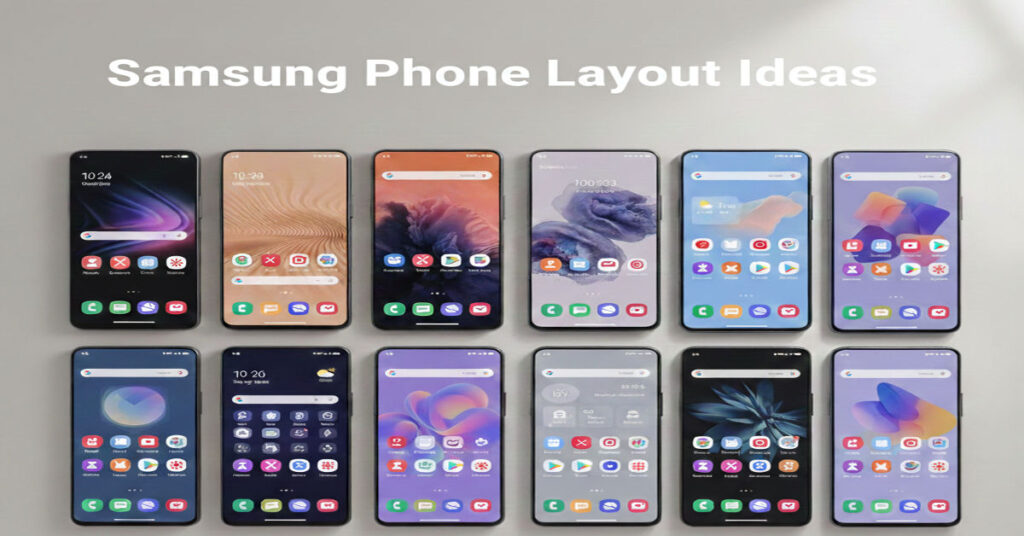
Every Samsung phone home screen is more than just icons and widgets. It’s where you start your day, launch the apps you use most, and shape the way you work, play and connect with the world. In the first hundred words here you will find concise, practical layout guidance that addresses search intent: how to organize your Samsung One UI home screen in ways that match different user needs while making the layout more intuitive, usable and visually compelling. We offer structured layout ideas from clean and minimal to fully customized advanced dashboards with contextual tips that help you choose what Samsung Phone Layout Ideas best for your routine and personality.
Samsung’s One UI is designed to make interaction easier by placing key content and controls where your thumb most naturally reaches and by enabling rich customization options that reflect your personal workflow. In this long-form guide you’ll get real insights, calendar of interface evolution, comparisons of layout approaches, expert context on user‑centered design and examples you can build immediately.
The Philosophy Behind One UI Customization
Samsung Phone Layout Ideas isn’t just a shell on Android. It emerged from Samsung’s long evolution of mobile interfaces aimed at “everyday simplicity” and comfortable one‑handed use. UX designer Soeyoun Yim explained that One UI was created to help users focus by minimizing visual distractions and aligning common actions within easy reach. Home screen layouts should follow that same philosophy: few decisions per glance, clear visual groupings and accessible controls.
A key concept here is the aesthetic‑usability effect, a design principle in which people perceive well‑designed interfaces as more intuitive even when they offer the same functionality as simpler alternatives. This means layout choices affect both how quickly you use your phone and how much you enjoy it. Effective One UI designs balance aesthetic appeal and functional clarity.
But before we dig into layouts, here’s a quick comparison of common home screen strategies:
| Layout type | Primary advantage | Best for |
| Minimal one‑page | Fast access, low distraction | Daily drivers, focus needs |
| Category pages | Thematic separation | Multi‑purpose workflows |
| Widget dashboard | Info at a glance | Productivity, planning |
| Dock‑heavy | Always‑ready essentials | Heavy multitaskers |
| Aesthetic theme | Personal expression | Creative users |
Each approach changes the ratio of widgets to icons, and how your visual hierarchy guides attention. We’ll break these down next.
Minimal One‑Page Layout: Focus Made Simple
The minimal one‑page layout is rooted in decluttering principles that UX design experts champion. Good interfaces shouldn’t make users think too hard about where their tools are. A simple home screen with a calm wallpaper and only the essential icons aids quick decisions and reduces cognitive load.
To build this layout start with a clean background that doesn’t compete with icons or widgets. Choose an unobtrusive clock and weather widget at the top Samsung Phone Layout Ideas. Keep only your 4–8 most used apps in the dock or central area so muscle memory kicks in. Reduce icon size or hide labels from One UI’s Home screen settings. Widgets like calendar or task lists add information without overcrowding if chosen with restraint.
This layout works best for users who want to open apps quickly with minimal screen clutter, and it can be particularly calming for high‑frequency device users.
Category‑Based Pages: Themed Workflows that Scale
Some people approach their phone like a workspace. That’s where category‑based pages win: separation by purpose. You might create one page for work (email, calendar, documents), another for social messaging and another for media or games.
Pair each page with themed content. A work page may show calendar and reminders, while a fitness page features step counters or health widgets Samsung Phone Layout Ideas. Limit widgets per page so glanceability isn’t lost. Group less often used apps into clearly named folders so everything feels organized. This layout fits users who shift their mental focus throughout the day and want their phone to reflect that rhythm.
Here’s a comparison of layout density choices useful for structured pages:
| Grid size | Density | Best use case |
| 5×6 | Balanced icons + widgets | Everyday mix |
| 5×5 | Larger touch targets | Accessibility or casual users |
| 5×7 | High density | Power users |
Grid changes can be made from Samsung Phone Layout Ideas settings, influencing how packed your pages feel and how easily you reach icons.
Widget‑Focused Dashboard: Your Phone as an Info Hub
For productivity‑oriented users the home screen can become an active dashboard rather than just an app launcher. Place larger clock, weather, calendar and tasks widgets prominently. Many One UI versions, especially recent ones, support stacked widgets that let you swipe through information in one place rather than fill the whole screen.
Adding a search bar such as Samsung Finder or a Google search widget at the bottom gives universal access to apps and web results. The goal here is to reduce taps and surface the most relevant information without needing many app opens.
UX design research shows that prioritizing content you need at glance improves usability and reduces friction, even if the screen looks “busier” at first. By curating only high‑signal widgets, you get efficiency without overwhelm.
Dock‑Heavy Layout: Essentials Always Visible
If apps are the heart of your device use, a dock‑heavy layout ensures your most essential tools are always one tap away. One UI settings may allow up to 8 apps in the dock. Fill these spots with apps you use constantly: communications, utilities, browsing and productivity tools.
Leave the rest of the home screen sparse. A single neutral widget can break up the space visually without drawing too much focus. Optionally remove the dock background in settings or with customization tools for a lighter, integrated look.
This pattern marries simplicity with instant access. It is especially effective for people who switch tasks frequently and want quick entry points everywhere.
Aesthetic and Themed Setups: Personal Artistic Expression
Not all home screens are purely about productivity. For creative users an aesthetic or themed design can be both expressive and functional. Use Samsung’s Wallpaper & Style or Good Lock and the Theme Park module to curate matching icon packs, colors and wallpapers that reflect a cohesive palette.
Blend custom icon shapes with subtle wallpaper blur effects to make icons pop without overwhelming the background. Good Lock allows nearly grid‑less designs and artistic layouts beyond stock settings. While this touches on function, it also embraces the idea that pleasing visual design helps users feel more connected to their device.
Design principles remind us that aesthetics can improve usability too: interfaces that look good are often perceived as easier to use.
Expert Views on Design and Usability
Here are three design insights that enrich how we think about layout:
“Design is everywhere. From the dress you’re wearing to the smartphone you’re holding, it’s design.” — Samadara Ginige, Designer and Developer.
“A user interface is like a joke. If you have to explain it, it’s not that good.” — Martin LeBlanc.
“Want your users to fall in love with your designs? Fall in love with your users.” — Dana Chisnell.
These ideas remind us that effective smartphone layouts aren’t just about aesthetics or efficiency alone, they’re about fitting human habits and expectations so well that users don’t think twice.
Structured Timeline of One UI Customization Features
| Year | One UI version | Notable customization feature |
| 2018 | One UI 1 | Launch with focus on one‑handed comfort |
| 2020 | One UI 3 | Redesigned widgets, smoother transitions |
| 2023 | One UI 6 | Introduced camera widgets on home screen |
| 2025 | One UI 7 rollout | Simplified grid and refreshed widgets |
| Late 2025 | One UI 8 beta | New AI and customization enhancements |
This evolution shows how Samsung has progressively empowered users to shape their screens with precision and personality rather than fixed patterns.
Takeaways
• Separate pages by task to support thematic workflows.
• Widgets are tools not ornaments; choose high‑signal widgets to reduce clutter.
• Minimal layouts improve focus by removing visual noise.
• Aesthetic themes can enhance perceived usability and satisfaction.
• Placement consistency supports muscle memory for frequent actions.
• Adjust grid sizes for density that matches your vision and needs.
• Keep essentials in the dock for instant access.
Conclusion
Designing your Samsung One UI home screen is a personal process that blends functionality, aesthetics and behavior. Whether you favor minimalism, thematic separation, rich dashboards or aesthetic expression, the key is thoughtful curation of space and information. Across One UI versions Samsung has evolved customization capabilities, letting users shape their phones into tools that serve specific goals and styles without sacrificing ease of use. Real expert perspectives show that good design is not just about looking nice but about guiding actions and reducing friction. Your ideal layout should empower you to do what you want with fewer taps, less friction and more joy.
FAQs
What is the best grid size for a clean home screen layout?
Most users prefer a balanced 5×6 grid for clear spacing that still fits meaningful widgets and icons without clutter.
Can I stack widgets in Samsung One UI?
Yes. Smart Widgets let you stack multiple widgets of the same size and swipe between them in place.
Does One UI 7 change home screen customization?
One UI 7 reorganizes grid and widget visuals for simpler layout; many users note differences in spacing and widget behavior.
Should I use Good Lock for home screen design?
Good Lock adds deeper customization like custom grids, icon packs and nearly gridless layouts, great for advanced setups.
What makes a good home screen from a UX perspective?
A design that minimizes decisions, offers predictable placements and surfaces key information without noise leads to better usability.
References
CareerFoundry. (2023, May 31). 15 inspirational UX design quotes that every designer should read. CareerFoundry. Retrieved from https://careerfoundry.com/en/blog/ux-design/15-inspirational-ux-design-quotes-that-every-designer-should-read/
Android Police. (n.d.). Samsung One UI explained: Everything to know about the Android skin. AndroidPolice. Retrieved from https://www.androidpolice.com/samsung-one-ui-explainer/
Samsung Newsroom. (2020, June 11). How designers have made One UI’s usability even better for Galaxy users. Samsung Newsroom. Retrieved from https://news.samsung.com/global/interview-how-designers-have-made-one-uis-usability-even-better-for-galaxy-users
Wikipedia. (n.d.). One UI. Wikipedia. Retrieved from https://en.wikipedia.org/wiki/One_UI
Wikipedia. (n.d.). Aesthetic–usability effect. Wikipedia. Retrieved from https://en.wikipedia.org/wiki/Aesthetic–usability_effect